
Descriptions of the cultivars grafted in 2026:
KENTUCKY STATE UNIVERSITY SELECTIONS:
KSU-Atwood™ Selected by Kentucky State University, KSU-Atwood™ was selected for its high yields, strong branching and mild tasting fruit. Fruits are medium sized with yellow-orange pulp.
KSU-Benson™ Selected by Kentucky State University, KSU-Benson™ is an early to mid season producer with attractive round fruits that pack and ship well. The fruits are medium to large, have few seeds and an excellent flavor.
KSU-Chappell™ Selected by Kentucky State University, KSU-Chappell™ is a vigorous tree with medium to large sized fruit. The fruit has a rich, complex flavor with a creamy texture.
KSU-Dunnigan and KSU-Pomper’s Choice will likely be available in 2027. I received scion wood too late to graft in 2026.
PETERSON PAWPAWS SELECTIONS:
Allegheny® Selected by Neal Peterson of Peterson Pawpaws, Allegheny® is a strong-growing tree with abundant fruit. The fruit are medium-sized but have a yellow pulp that is sweet and rich with a hint of citrus. Allegheny® is a precocious and productive selection.
Potomac® Selected by Neal Peterson of Peterson Pawpaws, Potomac® has the largest fruit of the Peterson selections and a sweet, rich flavor and firm texture. The tree grows very upright and has moderate productivity.
Rappahannock® Selected by Neal Peterson of Peterson Pawpaws, Rappahannock® has a unique vase-shaped habit and early season harvest. The fruit are small to medium, have few seeds and keep well.
Shenandoah® Selected by Neal Peterson of Peterson Pawpaws, Shenandoah® is a favorite of many. Fruit are large, have few seeds and have a fragrant, sweet flavor. The fruit ripens over a long period of time in mid season. Often bears a single fruit rather than a cluster. Shenandoah® is a good first pawpaw to try for its milder flavor.
Susquehanna® Selected by Neal Peterson of Peterson Pawpaws, Susquehanna® is Neal’s personal favorite for its large fruit with firm yellow to orange pulp. The flavor is very sweet with a rich, complex flavor. Consistently produces large fruit with few seeds. Later ripening with improved storage and shipping ability.
Tallahatchie® Selected by Neal Peterson of Peterson Pawpaws, Tallahatchie® ripens mid to late season with medium to high yields. The fruit has few seeds and a sweet mellow flavor with a pleasant aroma. The most recent Asimina triloba release of Neal Peterson.
Wabash® Selected by Neal Peterson of Peterson Pawpaws, Wabash® has unique large, round fruit with medium texture and creamy yellow-orange pulp.
JERRY LEHMAN SELECTIONS:
Maria’s Joy Selected by Jerry Lehman of Indiana, ‘Maria’s Joy’ produces medium to large fruit with yellow pulp and good flavor. Vigorous grower and early to fruit.
BLAKE COTHRAN (Peaceful Heritage Nursery) SELECTIONS:
Golden Moon Cothron selection from Berea, KY, produces medium to large fruits with freestone seeds, 6% seed and a bright yellow color break at ripening. Tasty, caramel flavor and firm flesh.
Sri Gold This selection from Peaceful Heritage Nursery produces heavy yields of medium large fruits with smooth, custardy light yellow flesh. Parentage is Susquehanna x Sunflower and has a low seed count.
OTHER SELECTIONS:
Al Horn White Flesh Selected in Indiana by Al Horn for its white flesh. Also known as ‘Horn’s White’ or ‘Al Horn Whiteflesh’. Fruit is large and flavor is sweet and coconut-like.
Green River Belle Selected near the Green River in Hart County, Kentucky, ‘Green River Belle’ has a firmer textured fruit with good flavor and a cinnamon aftertaste.
Kentucky Champion Selected in Kentucky in 2009, ‘Kentucky Champion’ has fruit with golden-orange pulp and a sweet melon-orange flavor with a pleasant aftertaste. Original tree was state champion in Kentucky.
Mango Very vigorous selection originally from the Tifton, Georgia area. Potentially suited to hot, southern areas. Tropical flavor and large fruit.
Nyomi’s Delicious Selected in Berea, Kentucky for exceptional fruit quality. Light yellow pulp with low seed count. Reliable and heavy fruit production. Possibly resistant to Phyllostichta.
Overleese Selected in Indiana in 1950, ‘Overleese’ was the winner of the ‘Best Fruit’ category at the Ohio Pawpaw Festival in 2011. ‘Overleese’ ripens early to mid-season and has large fruits with a mild-flavored, creamy yellow-orange pulp.
PA Golden ‘PA Golden’ was selected for its early, heavy fruit production. The pulp is a deep golden color and has a rich flavor. It’s a strong-growing tree with small to medium sized fruit.
Plum Crazy A multi-stemmed, interspecific hybrid selection of A. triloba and A. reticulata by Tony Avent of Plant Delights Nursery in Raleigh, North Carolina. Produces an extraordinary amount of red flowers up and down the stems. Upright rounded habit is really lovely. Fruit smaller, but tasty.
Prolific Selected in Michigan by Corwin Davis, ‘Prolific’ is known for its productivity and fast growth. The fruit is medium-sized with yellow pulp and a dense texture. Late-ripening.
Rebecca’s Gold Selected in 1974 in Bellevue, MI from a cultivated seed, ‘Rebecca’s Gold’ has medium-sized fruit with yellow pulp and a very sweet taste.
Spilt Milk A lovely ornamental selection of pawpaw with new foliage with white-splotched variegation.
Sunflower A highly popular selection discovered in Kansas around 1970. ‘Sunflower’ is a strong growing tree with golden-yellow pulp in a sweet and rich fruit. The large fruit ripens mid to late season.
Summer Delight Cliff England of England’s Orchard in Kentucky introduced this early ripening selection, known to ripen in July in Kentucky. Very sweet fruit with smooth texture.
Taytwo Selected in Michigan by Corwin Davis in 1968, ‘Taytwo’ has medium-sized fruit with yellow pulp and can produce up to 75 fruit per tree.
Tropical Treat Selected in Kentucky in 2010, ‘Tropical Treat’ ripens late in the season with fruit that tastes of a mild tropical vanilla custard. Medium-sized fruit with yellow flesh.

THE MIGHTY PAWPAW TREE
We offer premium grafted pawpaw trees, including Peterson pawpaws and Kentucky State University varieties. Grafted trees produce larger, better-tasting fruit with fewer seeds and typically bear in four to five years, while seedling trees may take six to eight years and vary widely in fruit quality.
For reliable fruit production, plant two different varieties or two seedlings for cross-pollination. Pawpaws are native to eastern North America and naturally grow as understory trees near streams and woodlands. They perform well in sun or partial shade, prefer well-drained soil, and are hardy in USDA Zones 5–8.
When planting, dig a hole deep enough for the taproot, handle roots carefully, water well during the first year, and mulch around the base of the tree.
UNIQUELY DELICIOUS FRUIT
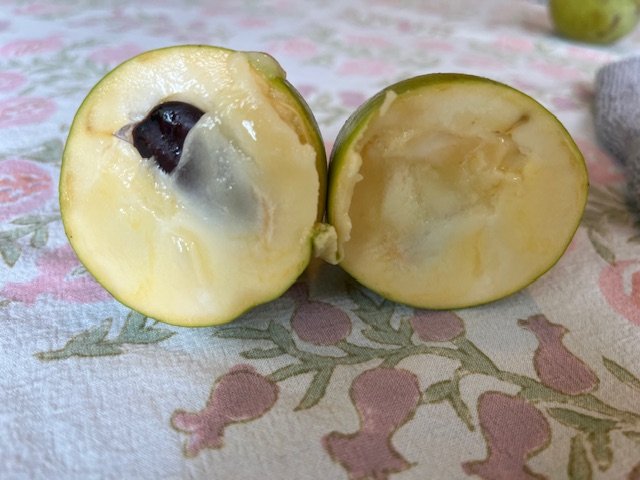
The flavor of pawpaw is hard to describe but unmistakably delicious. Often compared to mango, banana, or pineapple, it has a uniquely tropical taste. The pulp ranges from pale yellow to deep orange and has a smooth, custard-like texture.
Pawpaw fruit grows in clusters of one to seven and is ripe when soft to the touch, similar to an avocado. Fruit picked too early will not ripen off the tree. Fresh pawpaws spoil quickly—usually within five days—but the pulp freezes well.
We sell frozen pawpaw pulp in one-pound bags. Seeds are removed, the pulp is processed to a smooth consistency, and then frozen. Thaw in the refrigerator and use within two days.

PAWPAW SEEDS
Pawpaw seeds are relatively large, easy to handle, and quite beautiful. Seeds are available for purchase in the fall, from October through March, and are shipped in a state of cold stratification.
Seeds should not be allowed to freeze or dry out and require three months of cold stratification. They may be sown outdoors in the fall, where they will experience winter cold and germinate the following summer. Alternatively, seeds can be kept cold and moist in the refrigerator for three months, then sown indoors in pots filled with potting soil and lightly covered. Seeds should germinate within 10 to 12 weeks. Once seedlings are large enough to transplant, they will need individual deep pots to accommodate their taproot. Seedlings started indoors should be hardened off before being moved outdoors.